
Free Service Line Replacement Available for Galvanized Service Lines

Clean, safe and reliable drinking water is something we all depend on every day. At the Merchantville-Pennsauken Water Commission (MPWC), protecting the quality of that water is a responsibility we take seriously.

One important part of that responsibility is identifying and replacing older water service lines that may contain lead or galvanized materials.

Since 2021, New Jersey has required public water systems to maintain an inventory of drinking water service line materials and take steps to address lines that may contain lead. MPWC has been actively working to identify service line materials throughout our service area and coordinate replacements where needed. While the majority of MPWC’s service lines are copper, there are still properties where the material needs to be identified or replaced. As of August 2026, MPWC has fewer than 600 customer service lines left to identify.

What Is a Water Service Line?

A service line is the pipe that carries water from the water main in the street directly into a customers’ home. That line generally has two portions. MPWC is responsible for the portion from the water main to the curb stop at the property boundary while the property owner is responsible for the portion from the curb stop into the home, including the property’s plumbing system.

This distinction is important because identifying and replacing a lead or galvanized service line can involve both MPWC and the property owner.

Why Are Lead Service Lines a Concern?

Lead was once the industry standard for smaller diameter, individual water pipes that supply water to  the home because lead is strong and durable yet easy to work with. Older homes and buildings may therefore contain lead service lines, lead solder or other plumbing components.

Lead can enter drinking water when water comes into contact with lead-containing plumbing materials. Because lead can be harmful to human health, particularly for young children, infants and children, eliminating potential sources of lead exposure is an important public-health priority.

What Is MPWC Doing About Lead and Galvanized Service Lines?

MPWC has been proactively identifying older service lines and working toward their replacement.

New Jersey requirements call for water systems to maintain an inventory of service-line materials. To help complete this, MPWC has contacted customers through mailings, door hangers and in-person outreach. The Commission continues to work with customers whose properties have lead, galvanized or other non-conforming service lines.

MPWC also maintains a publicly available Lead Service Line Inventory and continues to update its information as identification and replacement work progresses. Customers can find the current Lead Service Line Inventory here.

This work is part of a larger, ongoing effort to modernize infrastructure and protect the long-term quality and reliability of the water system.

Does My Home Have a Lead Service Line?

If you live in an older home, there may be a possibility that some of the plumbing contains lead or other older materials. The age of a property alone, however, does not confirm the material of its service line.

MPWC is working to identify service line materials throughout its service area. Currently, fewer than 600 lines need to be assessed and their materials identified. Property owners unsure about the material of their service line should contact MPWC for verification of pipe material. A qualified plumber can also determine if your home contains lead-based plumbing fixtures.

If a MPWC technician needs to visit your property to verify a service line, personnel will be identifiable and will arrive in marked vehicles. Customers may be asked to provide access to the water meter and the area around the service connection.

What Can You Do to Reduce Potential Lead Exposure?

If you are concerned about lead in your home’s plumbing, there are several practical steps you can take:

  • Don’t consume hot water from the faucet. If you need hot water for food or beverages, draw cold water and heat it separately. MPWC advises customers not to use hot tap water for drinking or food preparation as hot water releases more lead from pipes than cold water.
  • Flush stagnant water. If the water in your plumbing system has not been used for several hours or overnight, let it run for 15 to 30 seconds, before using it for drinking, cooking or preparing beverages.
  • Consider testing your water. The most direct way to determine whether lead is present in your drinking water is to have the water tested by a certified laboratory.
  • If you use a filter, choose one certified for lead reduction. Not every household water filter is designed to remove lead, so check the product’s certification before purchasing one for this purpose.

What Happens If My Service Line Needs to Be Replaced?

When a service line is identified as containing lead or another material that requires replacement, MPWC will work with the affected customer on the next steps.

MPWC’s current replacement efforts include customer-owned portions of service lines that are identified as lead, galvanized or other non-conforming materials. The Commission is currently offering to replace galvanized service lines with new copper piping free of charge to customers. Customers who have received a request from MPWC should respond promptly to address the matter.

Because responsibility can vary depending on which portion of the line is involved, customers with questions about their property’s specific situation should contact MPWC directly.

Protecting Water Quality Is a Shared Responsibility

Providing safe drinking water takes more than treating water at the plant. It requires maintaining treatment facilities, monitoring water quality, maintaining hundreds of miles of infrastructure, identifying aging materials and working with customers to address problems when they are found.

MPWC’s commitment to water quality extends throughout the entire system. The Commission continuously monitors its water system and treats its water to help prevent corrosion and protect drinking water quality.

As MPWC celebrates 100 years of serving the community in 2026, that commitment remains at the center of its mission: delivering clean, safe and reliable water to the people and communities we serve.

Have Questions About Your Service Line?

If you are unsure whether your property has been inventoried, have received a notification from MPWC, or have questions about the service line replacement process, contact our Customer Service team at 856-663-0043.

Customers can also visit MPWC’s Customer Service and Lead Service Line resources for the latest information, including the Lead Service Line Replacement FAQ and current inventory resources.

As the Merchantville-Pennsauken Water Commission (MPWC) celebrates its 100th anniversary of serving our communities, we’re proud to share another year of outstanding water quality. Our Annual Water Quality Report highlights the results of extensive testing conducted throughout 2025 and reflects the same commitment to public health, safety, and reliability that has defined MPWC for a century.

This Consumer Confidence Report (CCR) analyzes testing our commission undertook between January and December 2025, as we delivered an average of 6 million gallons of water each day. During that time, we are thrilled to report that water provided to homes and businesses across Merchantville, Pennsauken, and portions of Cherry Hill and Camden City complied with or exceeded all state and federal drinking water standards.

We invite you to review the numbers in the report, which include:

  • Zero (0) violations in all tests for regulated and secondary substances.
  • Lead levels ppb (parts per billion) so low as to not even be detectable.
  • The trace amounts of copper found in the 90th percentile of tests – that is, some of the highest detected amounts found – was still as low as .0166 ppm (parts per million). That’s a mere eighth (1/8) of the Maximum Contaminant Level allowed by the EPA.
  • All regulated substances tested for returned exceptionally low findings, such as Haloacetic Acids (3.62ppb out of an allowable 60ppb – or roughly 1/16 of the allowable amount).

In the report you’ll also read about our steadfast compliance with the Safe Water Drinking Act (SDWA), an explanation of where MPWC water comes from, a list of substances that can be found in water, and more.

Over the last century, we’ve been committed to delivering the best quality drinking water to our customers, and this report reflects our dedication to that mission.

MPWC Urges Customers to Conserve Water in Warm Summer Months

Pennsauken, NJ – As the summer kicks off and temperatures rise, Merchantville-Pennsauken Water Commission (MPWC) is urging customers in Merchantville and  Pennsauken, as well as parts of Cherry Hill and Camden, to use water wisely and conserve this summer season.

“Summer months bring increased demand on water systems due to lawn irrigation, gardening, pool maintenance and other outdoor activities. Mindful water usage is especially important as New Jersey continues to face an ongoing drought warning,” said  Rich Spafford, engineering director, MPWC. “Small adjustments to water use help protect this valuable natural resource and support long-term sustainability efforts, while preserving our water supply and managing water bills.”

Outdoor watering accounts for a significant portion of residential water use during the summer months, with homeowners using between 30 and 70 percent of their water outdoors. The Environmental Protection Agency (EPA) estimates that 50 percent of water used outdoors is lost to evaporation, wind or runoff.

Since every drop makes a difference, the MPWC recommends the following water-saving practices:

  • Water lawns and gardens during the early morning or evening hours to minimize evaporation and consider limiting watering to two times per week.
  • Consider rain barrels to collect rainwater for watering outdoor plants and landscaping.
  • Use a broom instead of a hose to clean driveways, sidewalks and patios.
  • Cover your pool when not swimming to reduce evaporation rates and use a water saving filter.
  • Repair leaking faucets, irrigation systems and outdoor spigots promptly.
  • Install water-efficient fixtures and appliances whenever possible.
  • Run dishwashers and washing machines only with full loads.
  • Raise your lawnmower blade to at least 3 inches for grass that is more drought resistant.
  • Plant and group native, drought-tolerant plants based on water needs.

In New Jersey, a drought warning has been in place since December 2025. If conditions do not improve, a Drought Emergency could be declared, which carries mandatory restrictions. Residents are encouraged to reduce their water usage and adhere to guidelines or recommendations put forth by the New Jersey Department of Environmental Protection or their municipalities.


About MPWC
The Merchantville-Pennsauken Water Commission is a public water utility co-owned by the Borough of Merchantville and Pennsauken Township dedicated to providing reliable, safe drinking water. MPWC proudly serves customers in Merchantville and Pennsauken, as well as areas of Cherry Hill and the City of Camden.


Read the Full Press Release Here

When the Merchantville-Pennsauken Water Commission (MPWC) was first established in 1926, treating drinking water meant adding lime to control pH and chlorine to kill bacteria. Nearly a century later, the MPWC system has grown into a multi-stage treatment process designed to remove everything from naturally occurring minerals to synthetic industrial compounds. Here’s how that process works — and how it’s evolved.

The Foundation: pH Control and Disinfection

Believe it or not, the earliest treatment steps at MPWC remain in use today. Lime is still added into the water supply to raise pH, which reduces corrosion in distribution pipes and protects infrastructure. Chlorine disinfection, which was first used in a municipal system in the United States in Jersey City in 1908, continues to be a primary protectant against harmful bacteria and pathogens.

While these two steps form the backbone of the drinking treatment process, they address only a narrow range of groundwater concerns. As the science of water quality advanced, so did the number of treatments required to address new and emerging contaminants.

Removing VOCs through Air Stripping

In the 1980s, volatile organic compounds (VOCs) became widely recognized as a significant groundwater concern. MPWC responded by installing high-service pumps and air strippers at its treatment facilities. The air stripping process forces large volumes of air through impacted water, causing VOCs to evaporate and allowing them to be separated from the water system.

Greensand Filtration for Iron and Manganese Removal

At the start of the 21st century, the treatment process evolved again to address iron and manganese. Although they are naturally occurring minerals, groundwater sources commonly contain elevated levels. At excessive concentrations, the minerals can cause rust or discoloration, impact the taste of water and result in buildup or deposits in plumbing systems and pipes, damaging infrastructure.

In the early 2000s, MPWC installed greensand filters at three of its treatment facilities. Greensand, a natural mineral that is processed and coated with manganese dioxide, oxidizes soluble iron and manganese (as well as hydrogen sulfide) and converts them into insoluble – or solid – particles that can be filtered out of the water.


Targeting Unregulated Compounds with Carbon Filtration

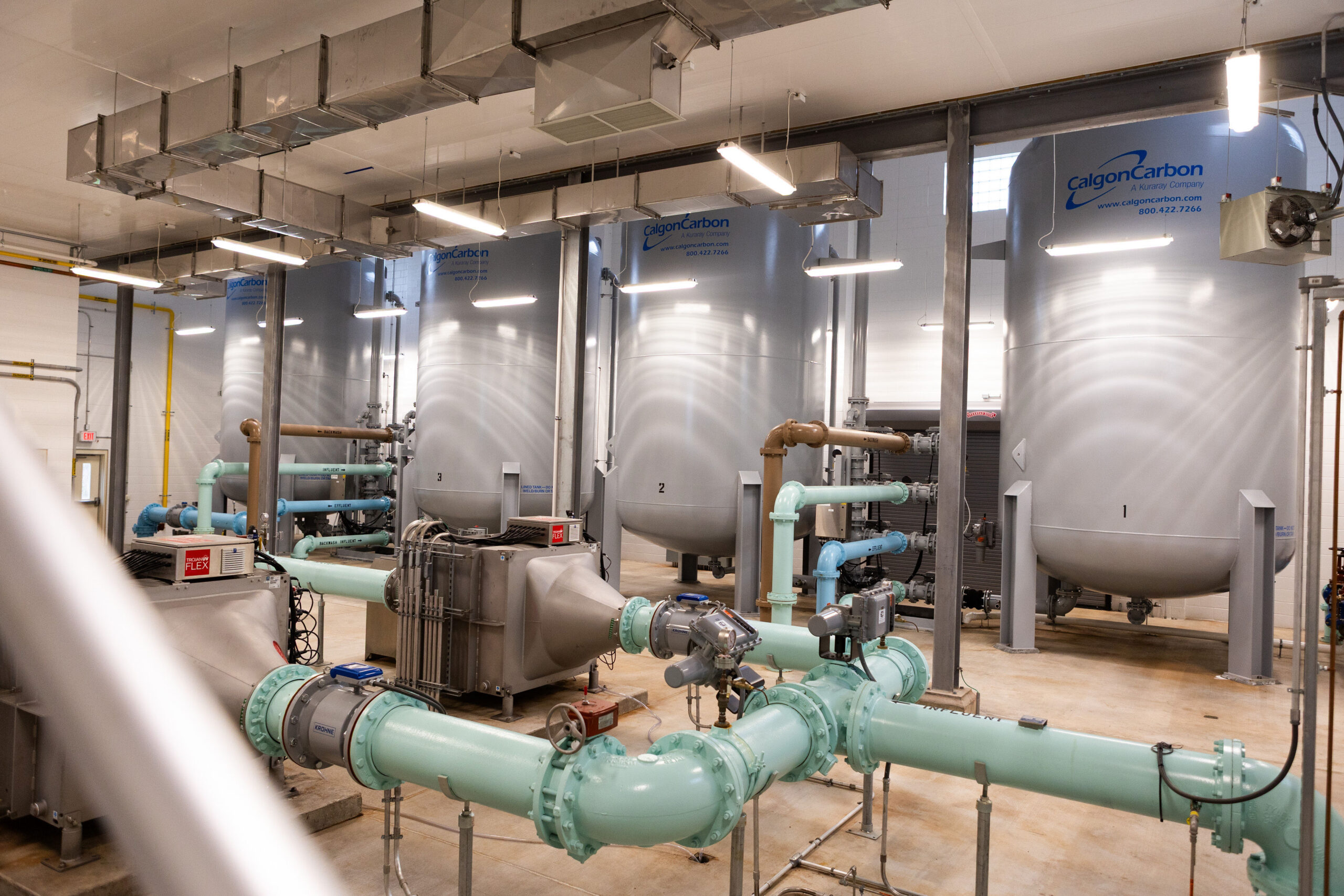
With support from a New Jersey Department of Environmental Protection grant, MPWC installed carbon filters at one treatment site to address unregulated compounds –  demonstrating that unregulated compounds could be removed, before standards and maximum contaminant levels had even been established. Activated carbon works through adsorption, meaning that contaminant molecules stick to the carbon surface, allowing them to be removed as the water passes through the filter.

This early step with advanced technology positioned MPWC well for what would become the biggest treatment challenge in decades.

Advanced Treatment for Emerging Contaminants

PFAS (per- and polyfluoroalkyl substances) and 1,4-dioxane are some of the newest and most complicated contaminants the water industry has faced. The manufactured, toxic “forever chemicals” break down slowly, pose adverse health risks and have been found in groundwater across the country.

The highly stable compounds are resistant to conventional treatment, and many water filters are incapable of removing them. As a result, water treatment now requires specialized treatment methods and rigorous testing to address PFAS and 1,4-dioxane.

MPWC’s response has been infrastructure-intensive. In 2018, construction was completed on a Granular Activated Carbon plant and Advanced Oxidation plant at the Woodbine facility. Similar treatment plants were incorporated at the National Highway facility, completed in 2023. Upgrades at MPWC’s remaining treatment sites are either underway or planned in the coming years to address evolving PFAS and 1,4-dioxane standards.

A Multi-Layer System

Today, MPWC’s treatment process includes a number of steps, each targeting a different type or class of compounds. And, the system has evolved as new science and advanced technologies become available. Daily water quality testing at each stage ensures the system is performing within required standards, from source to tap.

Over the last century, each treatment addition wasn’t a replacement — it was a new layer added on top of what came before. As new groundwater concerns are identified and regulations tighten, this layered approach will continue to define how MPWC protects the valuable drinking water for the communities it serves.

Earth Day serves as an important reminder of the role we all play in protecting the environment and preserving the natural resources, like water, that sustain our communities. For the Merchantville Pennsauken Water Commission, this year’s observance is even more significant as we’re simultaneously celebrating our 100th anniversary. We’re reflecting on a century of sustainable water management, which has allowed us to provide safe, clean and reliable water for those in our community.

From safe drinking water and sanitation to supporting local ecosystems and ecosystems, water is critical to daily life. This Earth Day, we’re taking closer look at how the MPWC safeguards your water, why conservation is important and how you can help protect this finite resource.

Why Water Matters on Earth Day

While the Earth contains vast amounts of water, only a small percentage is accessible freshwater. Protecting that supply is critical – not just for today, but for future generations. A  healthy water system is the backbone of public health, environmental balance, economic growth and more.

At MPWC, we pull water from 14 wells in the Potomac-Raritan-Magothy Aquifer. This aquifer underlies much of the South Jersey area and provides water to a great number of New Jersey residents in Camden and Gloucester counties through a variety of water utility systems. While it is a massive aquifer, high usage throughout the 20th century has led to declining water levels – a reality we must consider as we plan for the future.

The Role of Water Utilities in Protecting the Environment

Behind every faucet is a complex water utility system designed to ensure water is safe, clean and reliable. At MPWC, our focus is water. We practice environmental stewardship by managing and maintaining these systems responsibly, with long-term sustainability in mind.

This includes:

  • Treating water to meet or exceed strict quality standards outlined by the NJDEP and EPA.
  • Continuous monitoring for safety and compliance.
  • Maintaining and upgrading infrastructure to prevent service interruptions.
  • Detecting and addressing leaks to reduce water loss within the system.
  • Modernizing aging infrastructure to improve efficiency and address emerging contaminants.

While these efforts typically happen behind the scenes, they are essential to protecting both water quality and supply while minimizing environmental impact.


What You Can Do to Help

Protecting and conserving our water resources is a shared responsibility. Wise water use at home can make a significant cumulative impact, helping to reduce water and conserve our most precious resource.

Here are a few simple ways to make a difference on Earth Day and every day:

  • Fix leaks in faucets, toilets, and irrigation systems.
  • Install water-efficient fixtures and appliances.
  • Run dishwashers and washing machines with full loads.
  • Limit unnecessary outdoor watering and avoid water waste.
  • Be mindful of when you’re watering lawns and flowers – before 9 a.m. and after 5 p.m. in the summer helps avoid evaporation.
  • Adhere to guidance on watering during drought conditions.
  • Be mindful of water use during peak demand periods.


Water conservation works best when water utilities like MPWC and the community work together. Earth Day reminds us to value our water, protect it and use it wisely – not just once a year, but every day.

As the MPWC enters its second century of service, we remain your partners in conservation. By staying mindful of how we manage water today, we’re working to ensure it remains safe and accessible for the next 100 years and beyond.
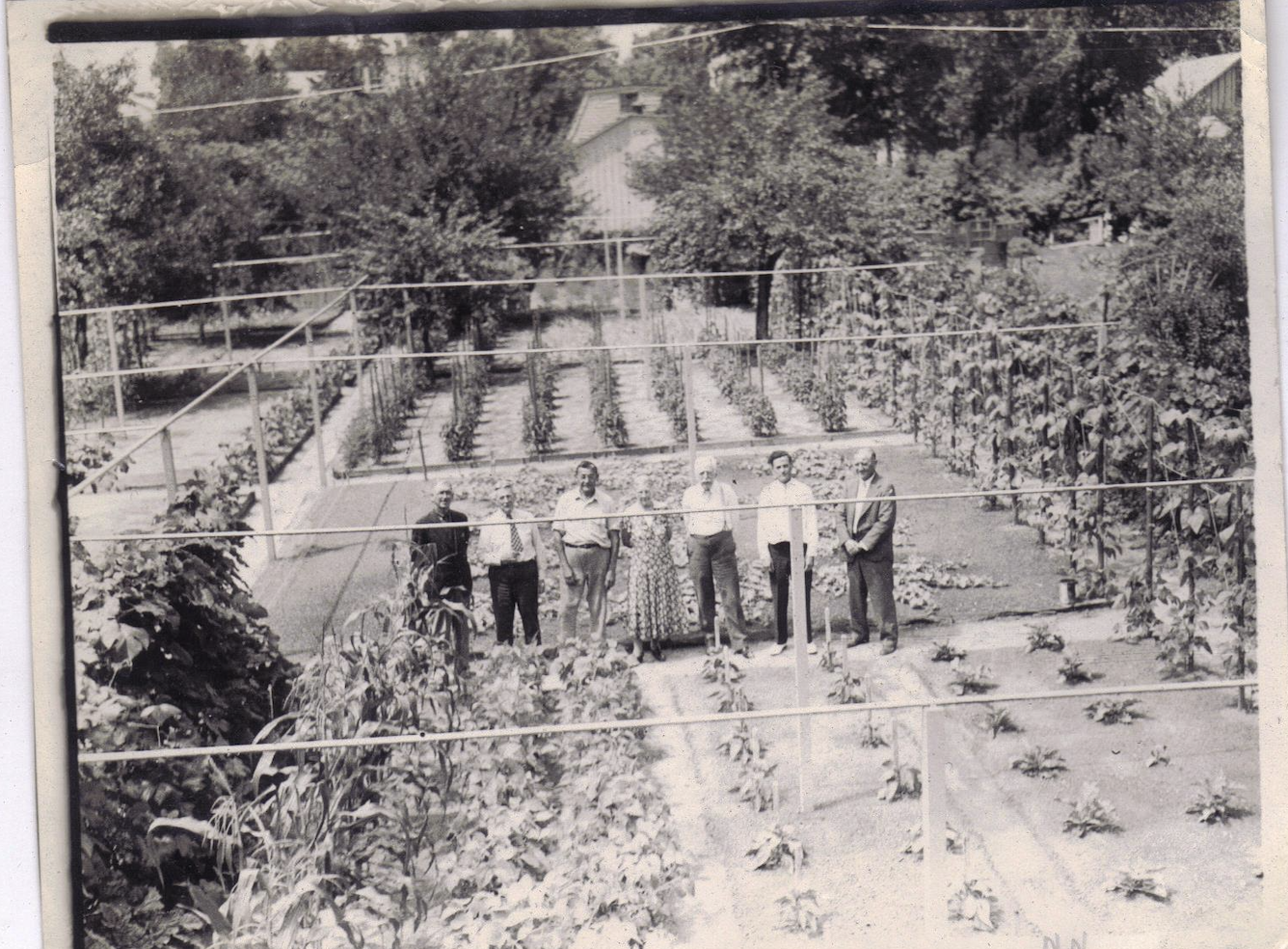
 

The Merchantville Pennsauken Water Commission’s spring flushing program will take place Sunday through Thursday nights beginning April 19 through April 23 and continuing April 26 through April 30, 2026, between the hours of 7:00 PM and 11:00 PM.

Hydrant flushing is an important element in our continuous efforts to improve the quality of water in our system. This procedure clears the distribution system of non-harmful sediment that may build up over time, as well as helps us ensure that each hydrant is operating properly for fire-fighting purposes. The MPWC schedules hydrant flushing during night hours to create the least impact on our customers.

While we are flushing in your neighborhood, you may experience decreased water pressure and /or temporary discoloration of your water. While discoloration can be startling to see, rest assured it poses no health or safety issues, as the cause of the discoloration is non-harmful iron and manganese mineral. The MPWC will be posting flushing routes on our Facebook page throughout the duration of the spring program. If you see your street or a nearby cross-street listed on our Facebook page, we recommend not running your water between flushing times as the best course of action to prevent an accidental draw of discolored water into your home or business system. If discoloration does occur, we advise you to simply run your cold water for a few minutes until it is clear. The MPWC encourages you to check for discolored water before doing laundry.

The MPWC works diligently to keep all of our neighbors and customers informed of the specific areas of flushing each evening. For the most up-to-date information please Like us on Facebook. We will post an updated list every day! In addition, if you have not already signed up to get notifications from the MPWC, please visit SMART 911 so that you may receive notification of hydrant flushing, as well as any other service notifications should they arise in your area. Any specific questions regarding the flushing program, please contact the MPWC’s Customer Support Center at (856) 663-0043.

In 2026, the Merchantville-Pennsauken Water Commission (MPWC) is celebrating 100 years of delivering clean, safe, and reliable water to Merchantville, Pennsauken and parts of Cherry Hill and Camden.

While access to clean water direct from the tap may be something many of us take for granted, this milestone is more than that – it’s actually evidence of community vision, resilience and public health leadership. And, it’s thanks to those who led our communities  a century ago that we are here today.

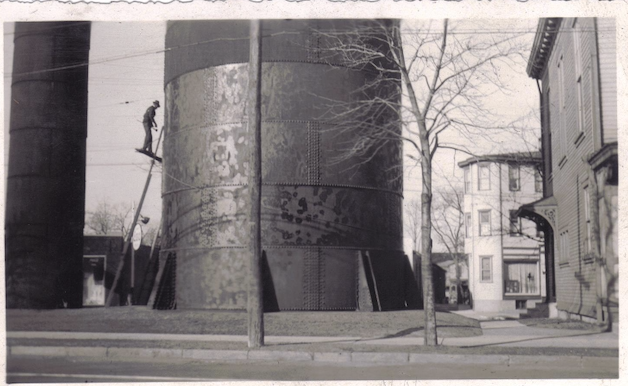
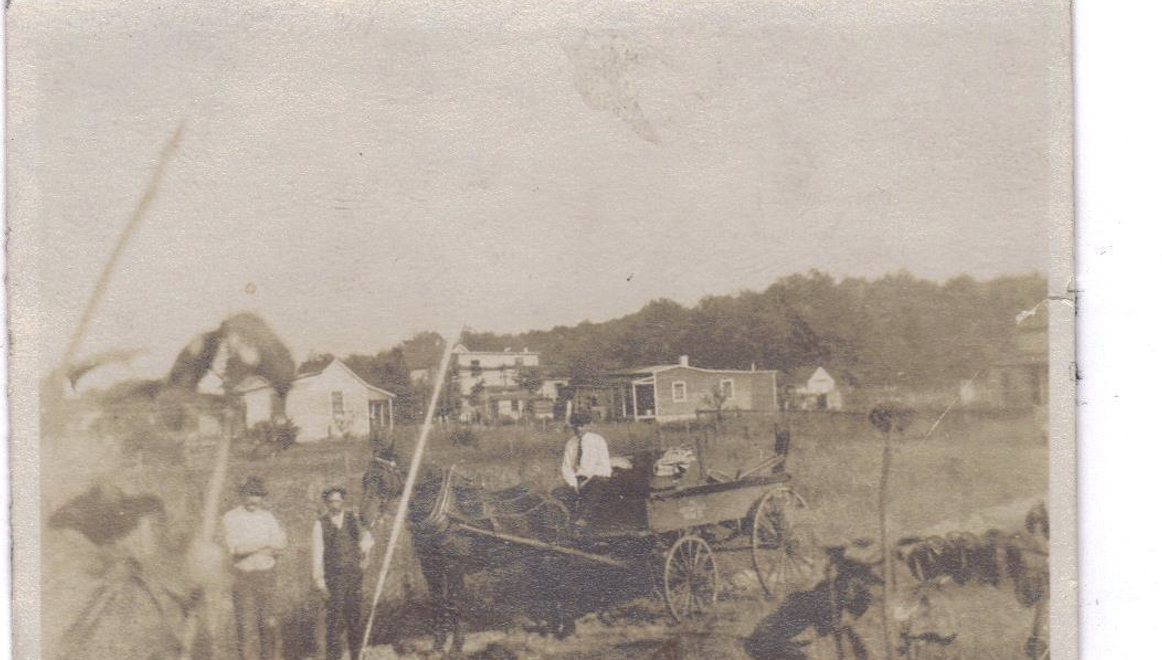
At the dawn of the 20th century, water was delivered by horse-and-carriage and service in the area was far from reliable. Our location along the Delaware River and its many tributaries meant yes, water was nearly everywhere – but, like the poem says, not all of it was suitable for drinking.


Some residents relied on poor producing wells, while some dealt with an overabundance and faced flooding from subsurface water. Others drew their water from the numerous nearby springs, ponds and streams, as well as the Pennsauken Creek, resulting in exposure contamination and even typhoid outbreaks. As the communities of Merchantville and Pennsauken grew, the demand for a safe, reliable water supply became urgent.

Earlier entities created to manage the water supply struggled. Water pressure was inconsistent and concerns about the quality of the water remained. Recognizing implications to public health, local residents took control of the existing Merchantville Water Company system in 1910s and early 1920s, investing in improvements and building it into a functioning utility and the precursor of the MPWC we know today.

When a private company showed interest in buying the water plant, the community advocated instead for joint municipal ownership by the Borough of Merchantville and Township of Pennsauken. The goal: a water supply “second to none at reasonable rates,” a promise MPWC continues to uphold today.

Since its official establishment in 1926, MPWC has grown into a modern water utility serving nearly 50,000 residents through more than 14,900 connections. The MPWC produces an average of 6 million gallons of water daily, sourced from the Potomac-Raritan-Magothy Aquifer. Hundreds of miles of underground mains and multiple storage tanks now ensure homes, businesses and emergency services have reliable access to clean, safe water.

And, just like when MPWC was founded in 1926, water quality and innovation remain top priorities. Annual investment supports infrastructure modernization, main replacement programs and advanced treatment upgrades like carbon filtration to remove emerging contaminants, including PFAS and 1,4-dioxane. These improvements safeguard public health while keeping water rates among the lowest in the region.

From springs and wells to aquifer-fed, advanced treatment systems, our story is one of community leadership, innovation and a century-long commitment to clean water for all who call the area home. As we look forward to the next century, we remain dedicated to protecting public health and strengthening our water system.

Follow along and join us as we celebrate our 100th anniversary by learning more about our history, our work and our plans for the future as we celebrate MPWC’s legacy and continued focus on clean, affordable and reliable water.

For more about MPWC’s 100th anniversary, visit mpwc.com/100-years.


View the public form HERE.

In 2026, the Merchantville-Pennsauken Water Commission (MPWC) is celebrating a century of delivering clean, safe and reliable water to Merchantville, Pennsauken and parts of Cherry Hill and the City of Camden.


Helpful Resources

For more information on water-related issues, visit the following sites:

Lead service line documents for download:

Lead Service Line Replacement FAQ's

DOWNLOAD NOW

Lead Service Line Inventory as of July 2026

DOWNLOAD NOW